00IT services
KIRA Aufzüge GmbH
Software engineering, systems integration and automation — built with the precision of a technical specification and maintained for the long run.
- 01
- Software development
- 02
- Systems integration
- 03
- Process automation
- 04
- Technical consulting

01Company overview
An IT company focused on systems that keep working after launch.
KIRA Aufzüge GmbH designs, builds and connects business software. We treat every project as an engineering problem: understand the system, document the requirements, deliver in verifiable steps and leave behind code that another engineer can read.
02 — IT service areas
Four disciplines, one engineering standard.
Software development
Web applications, internal tools, APIs and back-end services designed around how your organisation actually works.
Systems integration
Connecting ERP, CRM, databases and third-party platforms so data moves reliably between them.
Process automation
Replacing repetitive manual steps with scripted, observable workflows that people can trust.
Technical consulting
Architecture reviews, technology selection and pragmatic roadmaps for existing and new systems.
03Business problems
Where IT starts costing more than it returns.

- 01
Disconnected tools
Teams retype the same data into several systems, and records drift apart.
- 02
Fragile legacy code
Every change feels risky because nobody fully understands how the software behaves.
- 03
Manual reporting
Hours are spent each week exporting, merging and cleaning spreadsheets.
- 04
Unclear architecture
Decisions about platforms and vendors are made without a shared technical picture.
- 05
Slow delivery
Features stall in long cycles with little visibility into progress.
04Project delivery process
Five stages, each with a written output.
- 1
Discovery
We map the current systems, constraints and the outcome you need, in writing.
- 2
Specification
Scope, interfaces and acceptance criteria are agreed before build work begins.
- 3
Iterative build
Work is delivered in small, reviewable increments with working software at each step.
- 4
Verification
Automated tests and joint acceptance checks confirm the agreed behaviour.
- 5
Handover
Documentation, deployment notes and knowledge transfer so your team can own the result.

05Integration & interoperability
Systems that speak to each other, on purpose.
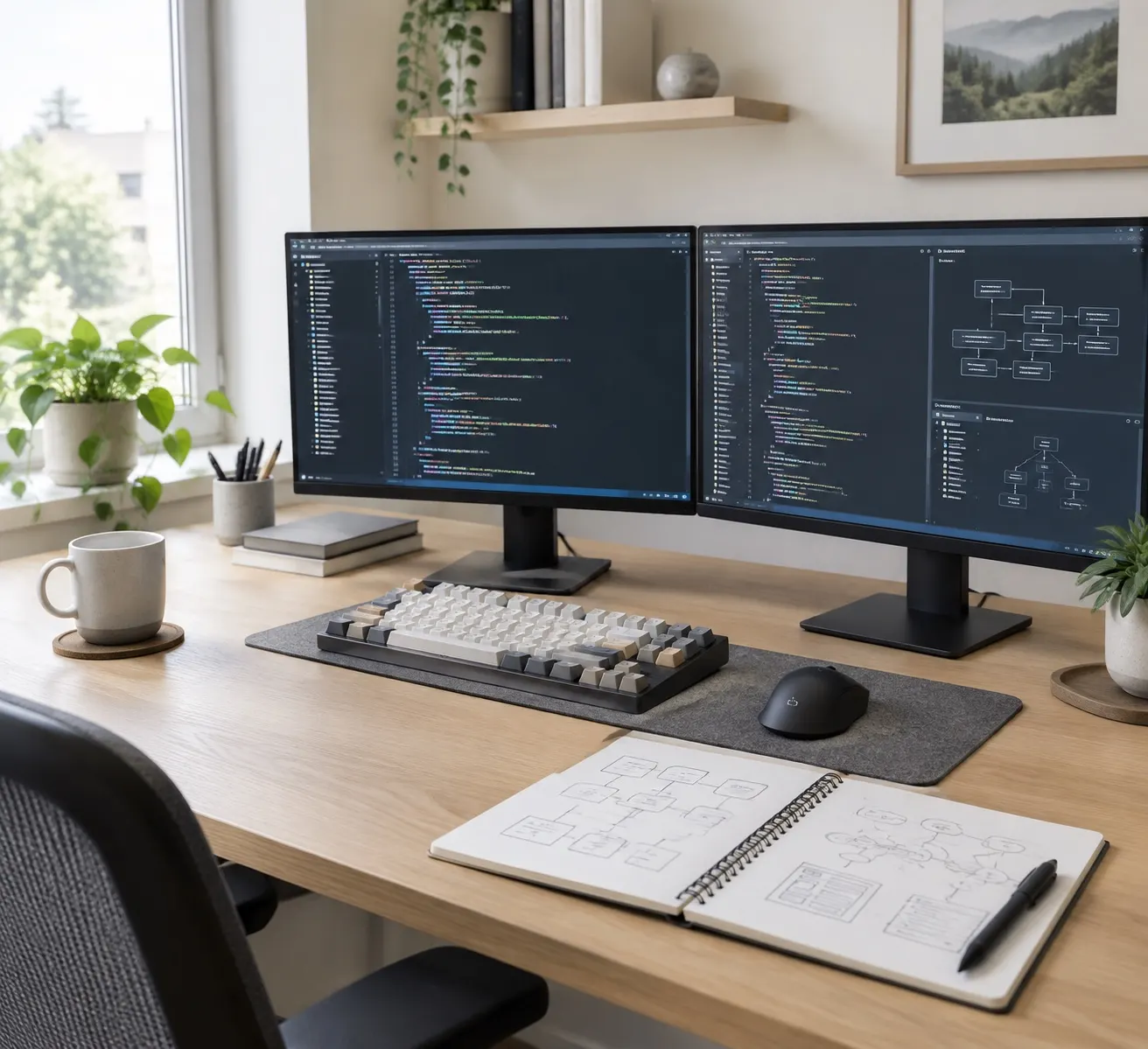
We design integrations around explicit contracts: documented APIs, defined data formats and clear ownership of each record. That makes behaviour predictable when one side changes.
Typical work includes REST and event-based interfaces, scheduled data exchange, database synchronisation and adapters for platforms that offer only file-based imports.
06Reliability & support
Built to be maintained, not just shipped.
- Reliability
- Automated tests, logging and monitoring are part of the deliverable, not an afterthought.
- Maintainability
- Readable code, consistent conventions and documentation that explains why, not only what.
- Operational support
- Maintenance, updates and incremental improvements can be agreed for systems after go-live.
07FAQ
Frequently asked questions
- What kinds of organisations do you work with?
- We work with companies that rely on software to run their operations and need it built, connected or improved — from a single internal tool to several interlinked systems.
- Can you work with our existing systems?
- Yes. Much of our work starts from what is already in place. We review existing code, data and interfaces and extend or integrate them rather than replacing them by default.
- How is a project scoped?
- Each engagement begins with a discovery phase that produces a written scope, the interfaces involved and acceptance criteria. Build work starts once that scope is agreed.
- Who owns the code and documentation?
- Ownership terms are agreed in the contract for each project. Our working practice is to deliver source code, documentation and deployment notes as part of the handover.
- Do you provide support after delivery?
- Operational support can be arranged as part of an engagement, covering monitoring, maintenance and incremental improvements as agreed for the specific system.
- How do we start a conversation?
- Send a short description of your system and goals to ColemanIsaac6590@hazerii.com.

08Contact
Describe the system. We'll read it carefully.
ColemanIsaac6590@hazerii.com